- 4-day interactive live webinar
- 11:30 am – 5:30 pm
- Tuesday, Sept. 15-Friday, Sept. 19, 2026
- Held online
- Up to 20 CE Hours
- $1,130 by Aug. 15
- $1,230 after Aug. 15
Overview.
Eating disorders are complex, high-risk neurobiological illnesses associated with significant morbidity and mortality. While first-line treatments such as CBT-E and FBT are effective for many individuals, a substantial subset of patients present with multidiagnostic profiles that include chronic emotion dysregulation, suicidality, self-injury, trauma, medical instability, and entrenched eating disorder behaviors. These individuals often cycle through levels of care, are described as “treatment resistant,” and experience care as coercive, invalidating, or unsafe.
The MED-DBT (Multidiagnostic Eating Disorder – Dialectical Behavior Therapy) model was developed in response to this gap. MED-DBT is a comprehensive, DBT-consistent, medically anchored adaptation designed specifically for individuals with eating disorders and co-occurring psychiatric and physical conditions. The model integrates DBT philosophy, behavioral science, medical risk management, and eating disorder–specific neurobiology to support safety, collaboration, and sustained engagement without relying on coercion or oversimplified recovery narratives.
This 4-day live intensive training provides clinicians with an in-depth, practice-oriented introduction to the MED-DBT model as outlined in the MED-DBT text. Participants will learn how to assess fit, organize treatment, target effectively, manage medical risk, address ambivalence and anosognosia, and apply core DBT strategies within the unique clinical realities of eating disorder care. Emphasis is placed on fidelity to DBT principles while addressing the ethical, clinical, and systemic complexities that arise when working with high-risk eating disorder presentations.
The training blends didactic teaching with clinical examples, case discussion, and applied decision-making. Participants will leave with a clear conceptual framework, shared language, and practical guidance for implementing MED-DBT within outpatient team-based settings.
Who this training is for
This training is designed for clinicians who:
- Have foundational training in DBT (e.g., intensive or foundational DBT training)
- Have current experience treating eating disorders
- Work with/are interested in working with clients presenting with co-occurring EDs, suicidality, self-injury, trauma, and medical instability
- Practice in outpatient or step-down settings using a team-based model
- While clinicians in solo practice will benefit conceptually, MED-DBT is a team-based treatment, and implementation assumes access to consultation and interdisciplinary collaboration.
Learning Objectives
At the conclusion of this 4-day intensive training, participants will be able to:
- Describe the rationale, theoretical foundations, and clinical indications for MED-DBT, including how and why it differs from standard DBT and first-line eating disorder treatments.
- Assess treatment fit and readiness for MED-DBT, including identifying appropriate candidates, contraindications, and common pitfalls in assessment and pre-treatment.
- Apply the adapted MED-DBT biosocial theory to conceptualize eating disorder behaviors in the context of biotemperament, neurobiology, invalidating environments, and diet culture.
- Use the MED-DBT target hierarchy to prioritize treatment goals, including determining when eating disorder behaviors constitute life-threatening (T1), therapy-interfering (T2), or quality-of-life–interfering (T3) targets.
- Identify and manage eating disorder–related medical risk within scope of practice, including collaboration with medical providers, interpretation of clinical data, and use of consultation-to-the-client strategies.
- Implement MED-DBT–specific adaptations to phone coaching, including the next-meal/next-snack rule and strategies to support eating, medical stability, and skill generalization without reinforcing risk behaviors.
- Apply commitment strategies to address ambivalence and anosognosia.
- Facilitate Life Worth Living (LWL) discussions that are collaborative, non-coercive, and responsive to the unique challenges of eating disorder recovery.
- Use collaborative contingency management strategies to modify reinforcing patterns that maintain eating disorder behaviors while preserving autonomy and therapeutic alliance.
- Conduct behavior chain analyses and missing links analyses specific to eating disorder behaviors, including restriction, purging, avoidance, and treatment non-adherence.
- Adapt DBT skills teaching for eating disorder populations, addressing medical safety, weight bias, diet culture, and neurobiological constraints while maintaining DBT fidelity.
- Describe the structure and function of MED-DBT consultation teams, including strategies to reduce clinician burnout, manage polarization, and maintain adherence to the model.
- Plan for endings, transitions, and movement beyond Stage 1, including decisions about treatment extension, higher levels of care, and readiness for trauma-focused work.


Instructor Credentials

Lucene Wisniewski, Ph.D., FAED, is a recognized clinician, trainer, researcher, and an Adjunct Assistant Professor of Psychological Sciences at Case Western Reserve University, who has taught over 150 workshops on Cognitive Behavioral and Dialectical Behavior Therapies internationally and has over 40 publications in peer reviewed journals and invited book chapters. She specializes in complex, co-morbid eating disorders, and is the Owner and Chief Clinical Officer of the Center for Evidence Based Treatment serving clients across the United States and Wisniewski Psychology Services, PLLC in New York.

Anita Federici, PhD, CPsych, FAED, is a Clinical Psychologist and the Owner of The Centre for Psychology and Emotion Regulation. She serves an Adjunct Faculty position at York University and is a distinguished Fellow of the Academy for Eating Disorders (AED).
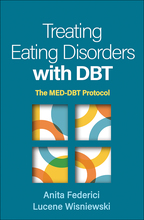
WIsniewski and Federici are co-authors of Treating Eating Disorders with DBT: The MED-DBT Protocol, from Guilford Press,
JAN
About the Author:
All content on this website credited to Webmaster have been directed and approved by CEBT management.